Bringing Panols back.
I brought years of product design experience to an unfinished idea—and used AI to carry it further than I could before.

Original portfolio artwork, archived in 2018. The story below separates the original launch, the revival, and upcoming work.
A personal need became a product. The vision was unfinished.
I wanted to share wide photographs without losing them to a single frame. Panols turned a photograph into connected images for a carousel or Instagram grid. My photography community brought the first audience, followed by an Apple promotion.
The first launch
I owned design, UX, prototyping, social and marketing. An iOS engineer owned development and TestFlight testing. As our availability changed, substantial updates slowed.
The return
Claude and Cursor prototyping at Nubank encouraged me to try Codex for iOS. Seeing Panols running in Xcode again opened the door. Recovering my old Panols through the library scanner made the comeback real.
What I prioritized—and what waited
Creation, splitting, library recovery and reliable exports came first. I deferred the broader Projects direction and text overlays while rebuilding the foundation. Photographic quality, framing and correctly ordered output remained essential.
The photograph sets the standard.
The editor needed to make precision feel approachable. Framing, rotation and styling all serve the result someone keeps or shares.
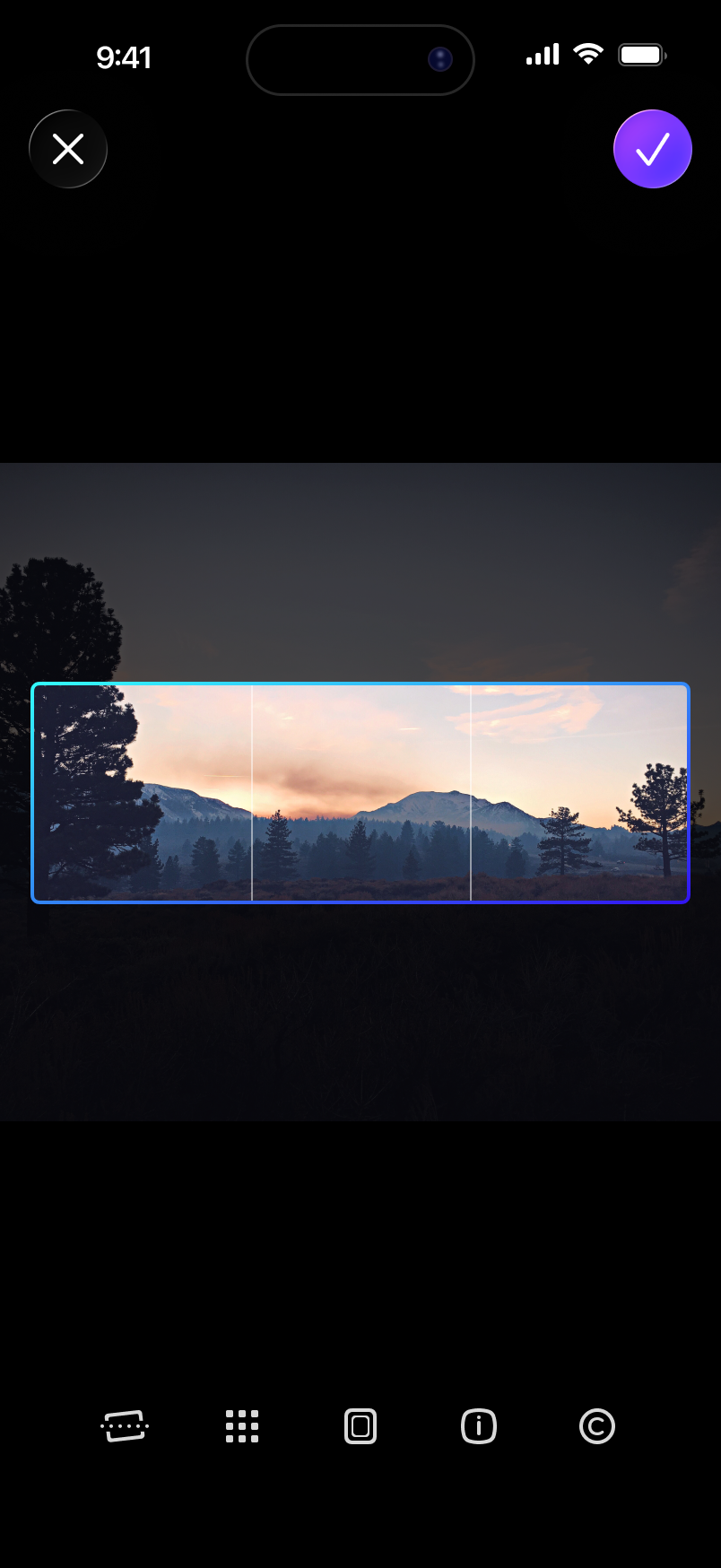
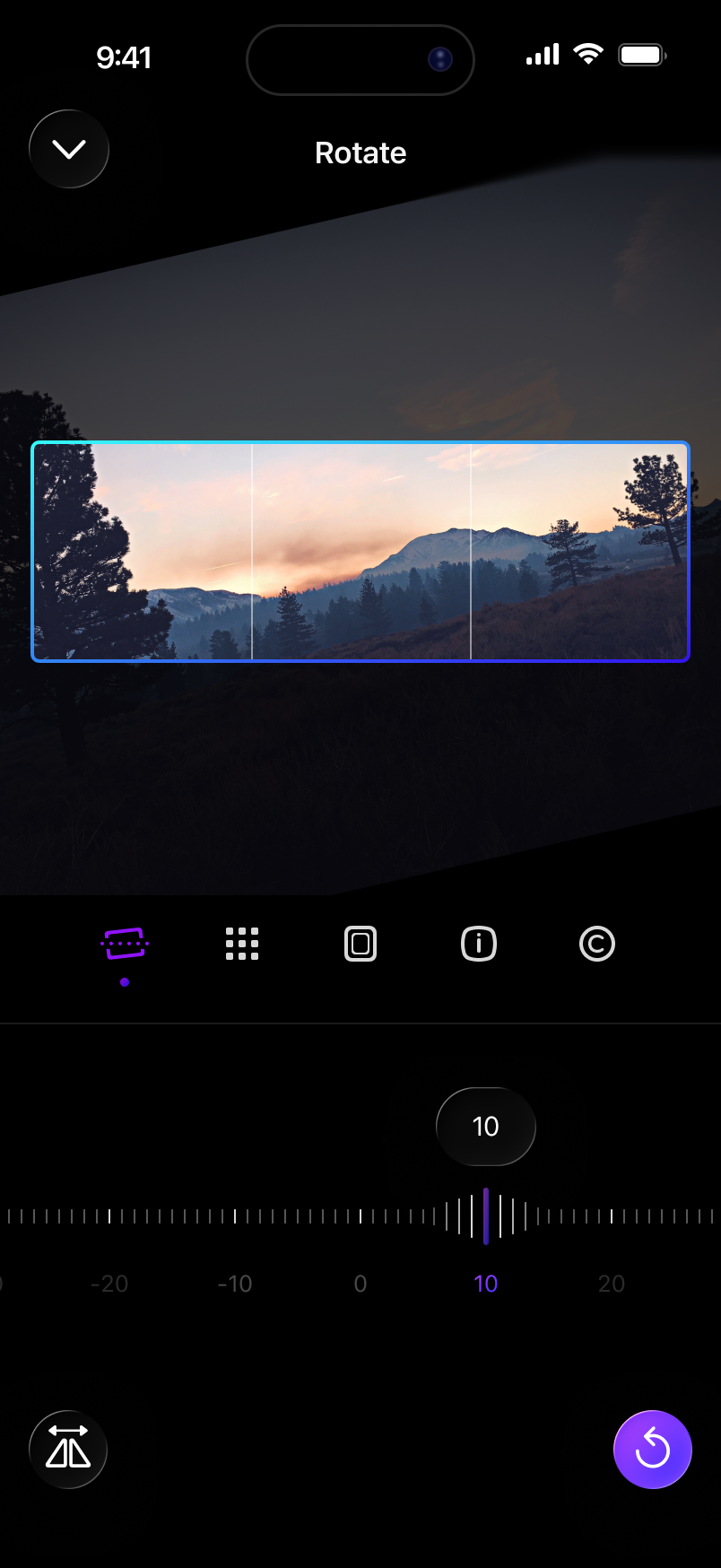
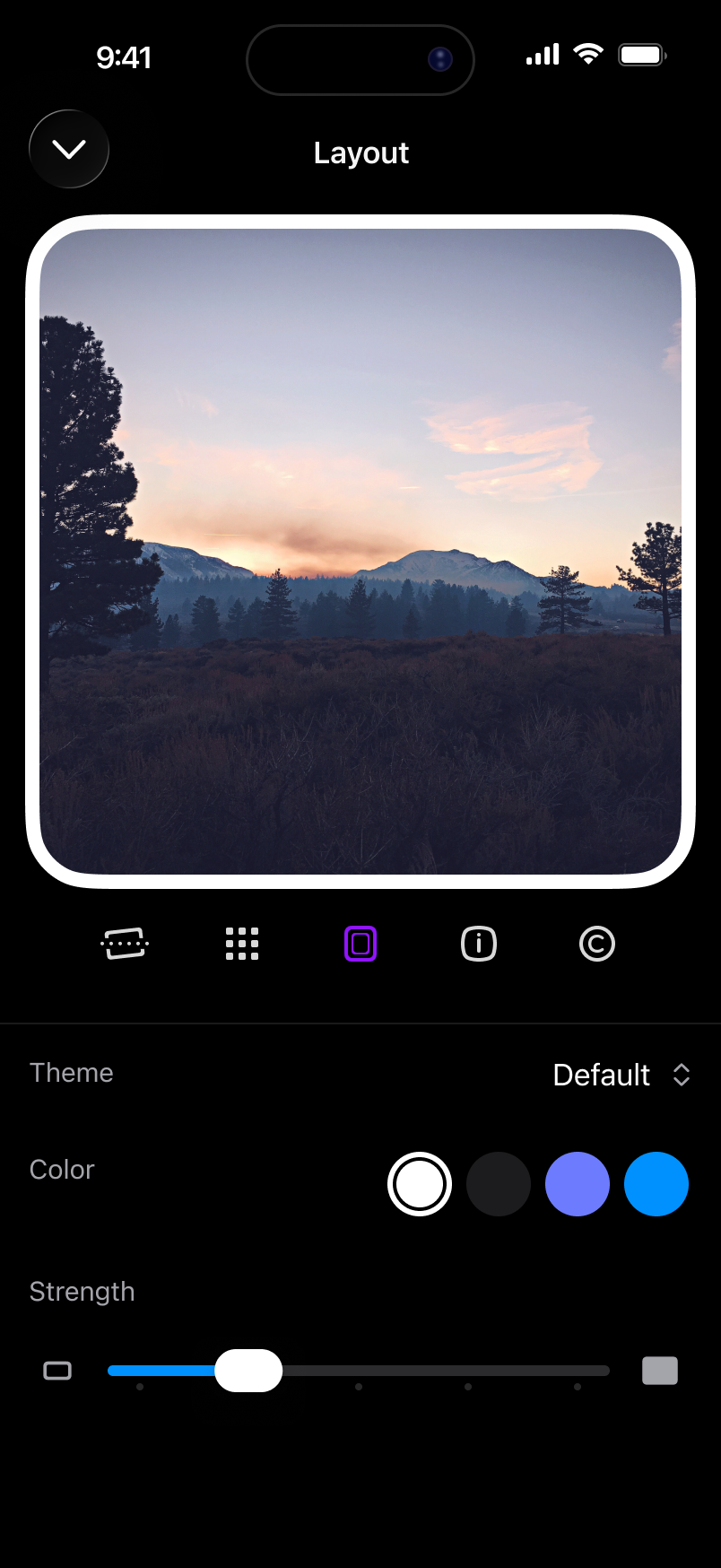
Editor design references from July 25, 2026, preserved in the project repository. These are design artifacts, not proof of the current shipped build.
The Details experience and the output bar
Early Details designs had weak hierarchy and copy, with a large header that still cropped the image awkwardly. My direction was an identity for each Panol, with adaptive color supporting the photograph. A direct card-to-Details recording and before/after frames are still being assembled.
For crop and export, the acceptance criteria were appropriate platform framing, preserved photographic quality and split images saved in order. Final build evidence belongs beside these design references before claiming exact implementation parity.
Keep the next step in sight.
I hid Next until someone made a permission decision. Testers interpreted that as a moving or missing button. I quickly prototyped three alternatives in Figma.
Redesign the flow
A broader solution, with a larger implementation cost.
Change the trigger
An unlabeled-button and automatic-modal approach.
Keep Next visible
Disable it until a permission decision, preserving the button's position.
A few testers, including the original reporter, reviewed the alternatives. I chose the focused change over the larger redesign. It made the pending step more apparent without hiding the path forward.
Choice, scope and evidence
Denied, limited and full Photos access all allow progression to the dashboard. Limited selections are respected, with a way to add photographs. This is a founder-reported feedback-led iteration; the comparison above summarizes the alternatives and does not recreate the original prototype screens. Those frames are still to be added.
A comeback has to bring old work with it.
A returning customer had deleted some photographs, leaving partial Panols in a years-old library. Several sessions of logs and investigation helped us work through the scanner problem.
Preserve a way forward
Missing assets needed explicit recovery choices: keep Details available, explain the problem, and offer reconciliation or remapping.
Rebuild trust
I grandfathered pre-2.5 owners into full access, including promotional downloads, and returned to years of reviews to address unresolved concerns.
What this example establishes
It demonstrates my involvement in customer support, diagnostics and a reported individual recovery. It does not establish universal migration reliability. The specific patch, build and verification record remain part of the next evidence pass. I will not publish customer logs.
The screenshot was right. The transition wasn’t.
Navigation work exposed a limitation of our checks: static end states missed defects between states. Repeated patches could also disturb neighboring behavior.
The June and July retros record the change in approach: slow the motion down, inspect frames, define shared behavior, and stop treating each tab as a separate fix.
Define intent
Product outcome, Figma or native reference, and behavior that must remain intact.
Build a slice
Scoped AI-assisted implementation with the relevant product and technical context.
Inspect behavior
Visual review and focused checks matched to the actual risk.
Carry learning forward
Coordinate delivery and record what should change next time.
How the environment supports that loop
Shared context, specialized SwiftUI/data/concurrency/testing guidance, tool connections, release coordination and retros form the playbook. My product and design experience supplies the judgment; the environment helps carry decisions through implementation.
The June retro identifies symptom patching and adjacent regressions. The July 7 retro records motion defects missed by resting-state checks. The October founder playbook acknowledges that a comparable delivery-speed improvement has not yet been demonstrated. These are working records, not an independent productivity benchmark.
What I would change about day one
I would establish one shared source first, then expand in layers. Moving many features forward before ownership and integration were clear created overlap. On another team, I would adapt the setup to existing people and practices, rather than impose the whole environment.
A live comeback, with work still ahead.
August 30–October 19, 2026 · First 51 days · RevenueCat
Checked October 20, 2026. Cohorts are not App Store downloads or necessarily first-time Panols users. Transactions are not distinct buyers. Revenue is not net proceeds. These figures establish early activity, not a measured growth turnaround.
Track the public releases
| 2026 | Version | Release focus |
|---|---|---|
| Aug 30 | 2.5.0 | Rebuilt experience, editing and Panols+ plans |
| Aug 31 | 2.5.1 | Library opening and recovery |
| Sep 1 | 2.5.2 | Expanded editing experience |
| Sep 3 | 2.5.3 | Migration and interrupted-scan recovery |
| Sep 7 | 2.5.4 | Memory, export recovery and support |
| Sep 11 | 2.5.5 | Unavailable-photo handling and diagnostics |
| Sep 13 | 2.7.0 | Intelligence, Shortcuts, RAW and language/accessibility work |
Source: US App Store version history, checked October 20, 2026. These are public releases, not the internal-build history.
From one photograph to a complete story.
Direct outreach and TestFlight conversations surfaced a recurring request: work with more than one photograph. Photographers and travelers wanted to assemble photos and video into a coherent trip post.
Projects is intended for 2.8.0, with ordering, previews and per-asset styling. Initial output saves to the library for manual posting. Sync can wait if saving and recovery are not proven.
The next commercial model offers a full complimentary export before an upgrade decision. Revised App Store messaging needs to explain what Panols does to someone discovering it for the first time. Neither direction has a measured conversion result yet.
Experience sets the bar. The tools expand the reach.
Panols brought product direction, design systems, craft and implementation into one practice. The framework grew out of real work: recovering history, refining interactions, investigating failures, and staying with customers after release.
Start with clear shared context. Build in useful slices. Inspect the result. Carry the learning forward.
That is the practice I can bring to a team—and the starting point I am developing for other designers and founders building native iOS apps with AI.
Case study in progress · October 20, 2026. Details footage, original onboarding frames and selected verification artifacts will deepen the examples above.